Wednesday, May 20, 2009

Story Time


We live in one of those circular houses where the dining room opens into the hall, which opens into the living room, the T.V. room, the kitchen, the pantry and into the dining room again. When our children were small we liked to play a game, which we called “Chase.” I would walk and they would run away from me, all shrieks and laughter, around and around the house. The game was most popular at bedtime when they wanted to avoid me anyway. I’m not sure if the game wound them up or tired them out, but at the strategic moment they would choose the escape route up the stairs. I never explained to them that this meant that I had won the game.

Madeline always preferred her mom at bedtime: Mom’s special interpretation of Peter Rabbit, Mom’s way of straightening the room and drawing the curtains, Mom’s lap, Mom’s hug and kiss goodnight. No boys allowed––until recently. It may have been a night when Mom was away at her book club. The game of chase was full of the usual shrieks and laughter, but they turned to tears as we went upstairs. It was too dark outside. I was reading all of the books the wrong way. I managed to get her into bed. I tucked her in and turned out the light, but I wasn’t Mom. So I told her a story about how, when I was her age, I had a dog named JoJo, and how JoJo had missed his mom and had decided to write her a letter. I have been a part of Madeline’s bedtime for a long time after that.

There was something wonderful about sitting there beside her bed in the dark and filling her seven year-old head with lies. I did have a dog named JoJo, and he was a dachsund, and he did like to run away at the drop of a hat (just like Madeline), and I was once a child exactly her age, but JoJo didn’t write letters to his mother or to anyone else, nor did he decorate our Christmas tree one year with my sister’s flowery underpants, nor did he ever play minor league baseball or climb trees. But she didn’t know this, and if she suspected she didn’t told me.

There was a certain amount of pressure every night. I never tried to think of a story until the lights were out. Sometimes the story wasn’t terrific, and there were many wonderful, densely-plotted tales which she didn’t heard all the way through because she’d fallen asleep, which was the point after all. Or was the real point that I’d found a way around the “girls only” policy at bedtime? I’m happy I did, for a while anyway. And I did it not by reading one of the four or five new books about fathers and daughters that come out every year. I just stumbled across it in the dark.

(The drawing is from my sketchbook. The story was published a few years ago in a magazine for fathers and daughters. I'm hoping some of the stories I invented and told to Madeline during that time are published before she is done with college. We'll see.)

Tuesday, May 19, 2009

Moon in Hand

I like spending time in antiquarian bookstores. I seldom find what I am looking for, which is exactly the point. Finding what you didn't know you wanted or needed is more fun. It adds something to the work, whether I'm writing or illustrating. I think it's called "cross-bred vigor." Uniformity is boring. So, I wasn't looking for it but I found a book filled with Renaissance and Baroque imagery: moons, suns, heaven, hell, planetary machinery, angels and demons, a catalog of supernatural rigamarole. I'd forgotten how to crosshatch, but it was fun relearning it. Dead masters can teach you a lot.

Monday, May 18, 2009

Smoke

The cigar has fallen on hard times. Once the sly device of witty men who used it to make you wait for a punch line––think Groucho and Churchill, Ernie Kovacs and George Burns; Bugs Bunny substituted a carrot––it's now the thing lobbyists light up. It's the only item certain oversized, overpaid men can still hold at a jaunty angle. It remains a useful device for metaphor. Cigars signify money and power even if they no longer imply wit or polish. This drawing appeared in my sketchbook in the week when Bush did something especially sneaky to the Clean Air Act.

Thursday, May 14, 2009

Of Bell Jars and Education

This art appeared in yesterday's New York Times, on the home page and the op-ed page. It's amazing how many people notice this small spot. I've gotten comments from people in California and Europe on these little thumbnails. The challenge of squeezing what is sometimes a very complex idea into a small space is formidable, and the turnaround is very very quick, a couple of hours. But it's fun.

Monday, May 11, 2009

Home Renovation

This LA Times story was about the hassle of renovating a house while living in it. Sharing domestic space with workmen is a familiar nightmare. Nice as they are, they steal your privacy and comfort. They arrive every morning early, armed with two by fours and hammers and the noise of electric drills. I drew this couple and their dog as bemused hostages. Another fun opportunity to take the roof off a house and see what is happening inside.

Friday, May 8, 2009

Plain Ordinary

I had a few minutes and a bit of paper and this is the result. I like it. It isn't about anything. He's nobody in particular. It's not a self portrait.

Tuesday, May 5, 2009

Swiss Army Model

My friend Michael J. Rosen was doing a book about the ubiquitous Volkswagen and asked me if I wanted to contribute some drawings. I did. I love projects where I get to draw whatever I can think of. This is my favorite of the things I thought up about the VW. The opposite of Bond's Aston Martin.

Friday, May 1, 2009

Della Francesca

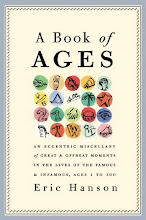
This dot series I painted for gallery sale also got into American Illustration, but it never caught on in everyday illustration assignments. Why? I suppose it's process. I paint the dots, then I paint the iconography freehand. It's hard to run that through a sketch approval process. These I painted by taking small details from paintings by Piero Della Francesca. I was recently back from Italy and still agog over everything Italian. One use I've gotten out of this dot style: the cover of my book. (See right.) The gallery that sold my paintings recently closed. I'm looking for a new one.

Wednesday, April 29, 2009

Jetlag

I did this illustration for the online magazine VIV, art directed by Campion Primm. The topic was avoiding jet lag. The idea had to do with turning the clock ahead. This was the image that came to mind. Again, the sort of thing you can't photograph.

Tuesday, April 28, 2009

Branding

The term comes from the Texas cattle business. Now, instead of using a red hot iron to show who we belong to, we wear a large identifying label across our chests on expensive t-shirts and sweaters. The shorts with the brand on the seat put the name right about where the cattle wore it. Americans show their independence by identifying themselves as members of herds. Sometimes we belong to several herds at once. I don't think Texas cattle were ever as cooperative or loyal or easily led as we are.

Monday, April 27, 2009

Egyptian

These were two of several illustrations I did for a P. J. O'Rourke piece in the Atlantic. What do I know about Egypt? Well, the pyramids are there, and so is the Sphinx. The article was typical O'Rourke, sardonic and satiric, so the point was to have some fun with the material at hand. Which I did.

Thursday, April 23, 2009

Primrose Hill, London

We spent a wonderful week here a few years ago. I don't get to London often enough, except in books. I did this drawing for our hosts as a thank-you. I occasionally get asked to draw pictures of houses. All I need is a snapshot. There is something about a line drawing. My favorite artists of this sort of thing, far better than I am: Edward Bawden, Ronald Searle and Marvin Friedman who used to do those wonderful illustrations for Gourmet magazine.

Dogs As Accessories

This story explained why dogs are such attractive accessories, even more attractive than jewelry or designer handbags in fact. I mean look at this guy; he's smitten. How can there be anything wrong with a person who owns a small cute animal? I think the woman has doubts about the guy though, and with good reason.

Wednesday, April 22, 2009

Late Night Comedy Without a Net

For a few years I've done regular illustrations for the L. A. Times about the entertainment business. I did this one during the recent writer's strike. The idea was to describe the difficulty late night hosts have being clever without writers to write their repartée, but it's very hard to illustrate something that isn't there. I solved that problem when I realized that without writers there are no cue cards.

Tuesday, April 21, 2009

Travelers With Dumbbells

Some of the niftiest illustrations are done on topics that are hard to visualize, I suppose because it gives me license to distort reality, to be really imaginative. This, I think, was for an article about exercises you can do while traveling, something I travel to get away from.

Sunday, April 19, 2009

A Modern Kitchen

I did this drawing for This Old House magazine. The article was about a Kitchen of the Future that had been on display at RISD. The magazine might have wanted to use photography but the exhibit had been taken down, and all they had was a snapshot of it. Luckily the snapshot was enough for me to work with. The resulting image has the offhand charm of a sketchbook drawing and provided a nice contrast with the photography that usually dominates shelter magazines.

Friday, April 17, 2009

Road Rage

The article was about Road Rage. It's what we call behavior that would get a two year-old a time out at pre-school, but it's hard to give someone a time-out when they are driving a full-size motor vehicle at high speed. Road rage is a scary, explosive thing, and I tried to capture that. Looking at the art now I see elements of Picasso's Guernica. I don't know whether that was intentional or even conscious. I've read that Picasso was prone to rages of his own but I don't know whether he drove a car. He never had a driver's license. I do know there is a Citroen automobile named after him. SooJin Buzelli art directed.

Thursday, April 16, 2009

Wednesday, April 15, 2009

Baseball

The body in motion presents challenges, especially for someone like me who never took a proper life drawing class. If you aren't a trained artist the human figure becomes a set of clothes pieced together, the body and bones inside being incidental. The contortions of a baseball player present this challenge in the extreme. An interesting puzzle to piece together with pencil and paper. I remember seeing the famous photographs of Sandy Koufax and thinking he must have been throwing his shoulder out of joint with every pitch.

This high kicking pitcher I did for Harper's is more reminiscent of Juan Marichal. Few lines, long limbs, an improbable posture, but instantly real. I learned that it became easier to draw an athlete in action if I made a point of loosening up too, giving the hand free play, not worrying so much about the specific points of accuracy in order to capture the larger gesture. Sports are full of exaggeration anyway. The art director was Stacey Clarkson.

Monday, April 13, 2009

It's About the Bike

I illustrate a column in the Macalester College magazine, designed by Brian Donahue. This column was about choosing between the car and the bike, an easier choice in places where it doesn't snow six months of the year.

Thursday, April 9, 2009

Shirt & Tie

So many neckties here in Chicago. Which reminded me of this sketchbook piece I did. I own neckties. I collect them. I actually have a few dozen club and regimental ties given me by a physician to the Royal Family. But I seldom wear them. I'd feel silly wearing a tie in my studio. I envy those important and powerful people who do get to dress that way, like my dad did when he worked in one of these big Chicago skyscrapers.

Tuesday, April 7, 2009

Highway Architecture

I didn't draw these while driving to Chicago yesterday, but I could have. Ever since I was a boy I've been looking with a strange fixity at the elements of the landscape seen from the road: pylons, farmsteads, fields, roadside architecture, signage. Each element is a kind of milepost, a punctuation mark. Each diverging road leads off in another direction, vanishing at a horizon that seems more interesting than the one I am driving towards. I have written stories, essays, film-scripts and part of a novel around this lifelong habit of observation. But the pictures contain stories in themselves. Someday I'd like to publish a book with these pictures and no words at all. Interested publishers should feel free to call me.

Sunday, April 5, 2009

Manhattan Street

For this painting I used a set of colors I associate with the 1950s: grays, yellows, browns, turquoise. Also a style: part Utrillo, part Abe Birnbaum. Something you might have seen in Vogue in 1952. Better than this, of course, but the same feel. At least that's what I was aiming for. This was painted for my wife. A very appreciative client.

Thursday, April 2, 2009

Texans

I did this feature illustration for Texas Monthly several years ago. The story was about the teaching of Texas history, so I had the idea of overlapping portraits of ordinary historic Texans with Texas icons I grew up with, namely my tin-toy Alamo and the molded plastic gun-toting cowboy. The art director was D.J. Stout.

Wednesday, April 1, 2009

Mariachi


I love drawing musicians. I think it's because I love music but can't play anything. But there's also a shapeliness to the instruments. They are beautiful machines with elegant knobs and buttons. I did this mariachi guitarist for Mike Schacherer when he was at Little + Co. The poster is for a fundraiser for a Spanish immersion school. The fun thing about b&w art is seeing what the designer will do with it.

Monday, March 30, 2009

For Target

Working in Minneapolis one inevitably does something for Target. The taste level is uniformly high, so it's always a pleasure. This was a project I did for a Target booklet about kids and education, specifically arts education which I'm very keen on. The agency that put it together was Jack Morton


Friday, March 27, 2009

Thingness

I don't usually draw things from life. Usually I visualize. Sometimes I use toy or decorative ceramic versions of things as stand-ins. But there's something wonderfully concrete about the thing itself. A beauty of organization is part of usefulness. The blunt obviousness is what makes an icon; what I call "thingness." It is what it looks like, and how could we imagine it differently? Which is why I still draw dial telephones and fall back on typewriter keys to represent the machinery of letterforms. These were another exercise done at the kitchen table. Still lifes of things on hand on pieces of art paper torn into fourths, with black gouache.


Wednesday, March 25, 2009

Figurist

Whenever I'm not sure what a picture is of, or not sure it looks what I meant it to look like, I call it "Figurist". It always works. This is one of a series I did for a gallery show in Florida. The week I arrived there for the show the gallery mysteriously changed hands, leaving me with a whole bunch of valuable paintings, far more than I have walls to hold. I think the thing that looks like an igloo actually is an igloo. Why it is an igloo I am not sure; I just freehanded it. But I like it.

Tuesday, March 24, 2009

Bagatelles


I was asked to do some spot series for the New Yorker. None of them ended up being used, but they began a whole category of gallery drawings. I call them bagatelles. This first set has a choreography and story line among the different figures. The second is just an arrangement of icons that might resemble something or might not.

Monday, March 23, 2009

Man With Book

I drew this with a dry brush and gouache at the kitchen table. One of seven or eight I did one evening while supervising homework. They appeared in the Believer magazine, but I've also visualized them printed large as posters for something or other.

Sunday, March 22, 2009

Gum Machine

This is another image from my children's book "When I'm Big." I like having the chance to work big without complexity. I think the distorted perspective in the wristwatch and the fingers makes it more interesting than if I'd done a perfect rendering. Sometimes I do a drawing and need to go back and work some imperfections into it. Looking at it now I think the torsion in the index finger echoes the torsion in the slot of the gum machine. I left the gumballs without outlines; it makes them look more delicious.

Thursday, March 19, 2009

Wednesday, March 18, 2009

Absent-minded Economist

The lords of money and commerce think of the dollar as an abstract thing. Hedge traders think of it as the bean in a shell game. Businessmen sometimes believe it's holy. I think it's more like the bubble coming out of a bubble-pipe.

Tuesday, March 17, 2009

Collage With Red

I fell in love with Hannah Hoch after seeing her work in a show Peter Boswell curated at Walker Art Center. I began playing with scissors. The point isn't to nail an explicit idea to the wall but to suggest things. I don't remember what I was suggesting here. It would be interesting to start a list of what it might mean, or write a story around it.

Caliban

A couple of years ago this image appeared in my sketchbook. I suppose I was trying to describe what kind of leadership was in the driver's seat. A kind of brute instinct seemed to have taken over, and I thought of Caliban, the brute from Shakespeare's play, the Tempest. Our businessman's government is a fine horse, but it's still basically a horse.

Sunday, March 15, 2009

Faces

Because I never went to art school and never drew live models, I learned how to draw people by looking at art, seeing what I liked and how it was done. Which may explain why my style is as various as it is. Sometimes borrowing a cast of eye or a gesture from Max Beckman, organizing a landscape like Edward Bawden, setting the feet or rendering brickwork the way Ronald Searle did. These faces remind me a little bit of Graham Laidler (Pont), who drew English characters for Punch: the dotted eyes especially. A roomful of people like this becomes an exercise in repeat colors as much as anything, trying to create a balance of pattern and palette, and an even mixture of races, classes and genders. The art director was Mike Schacherer, then of Little + Co.

Friday, March 13, 2009

Country Roads


I love how country roads are ornamented with telephone lines and fences and punctuated with two tire-track driveways and railway lines. Drawing these landscapes I am calling up the hours spent with my cheek pressed against the window in the backseat of a Ford Fairlane, noticing.

Thursday, March 12, 2009

Directors

Another case of a sketch they didn't choose. The story was about wannabe film directors, and they went with a row of directors chairs instead, which actually turned out very nicely. We all have a technique for getting people to choose the option we prefer. We learned it as kids playing Old Maid. But people choose what they like. I painted this one anyway, for my portfolio.

Tuesday, March 10, 2009

Medicine

Occasionally the art director doesn't pick my favorite sketch. If I like it a lot I'll paint it anyway and drop it in my files. This is one of those cases. The story was about how medicines begin to affect our body chemistry, and I imagined this guy, shaped a bit like a pill bottle. The further you stray from realism the easier it is to see the metaphor. I think the art director wanted something more concrete. I can do concrete too.

Saturday, March 7, 2009

Stress

The LA Times article described the ways stress affects our general health. (It ain't good for us.) You'll be familiar with the stresses: bosses, kids, medical worries, bills, spouses. I made the main figure a man instead of a woman, probably because I was having a stressful day. But I also have a harder time making women look comical. The wife here looks less hectoring than the familiar Thurber wife. The amount of hair the man has lost to worry reflects my own.

Thursday, March 5, 2009

Tourist Photographs


(Illustration and photography are rivals, but I love photography. Here is an article I wrote for Hemispheres magazine; I illustrated it with photographs. The illustration above was done for Travel & Leisure. Er-H)


My wife and I were in Crete years ago. We traveled light, everything for two people in one small athletic bag. She discovered olive groves and beaches, I discovered photography. Everything I saw seemed as if it had been invented in that spot, that arrangement, that original and unexpected but inevitable form, just for me to take its picture. Trees shaped by Mediterranean centuries. Box-sized shops with open fronts spilling Greek housewares and hardwares and textiles and groceries. Houses sized and shaped to fit into a photograph, like little Parthenons. People in picturesque costumes stared at me from chairs in front of blue-painted doors, daring me. My wife, who is far more sensitive than I am, told me it would be rude to photograph them. I remembered that in some places it was believed that cameras took your soul. I hesitated until the moment was gone. Henri Cartier-Bresson once said “Photographers deal in things which are continually vanishing and when they have vanished there is no contrivance on earth which can make them come back again.” But people with cameras aren’t neutral any more than they are invisible, and natives of every place are entitled to their souls. I haven’t looked at our photos from Crete for years now, but I can still remember the pictures I almost took, the regret having made them indelible.

When we went to Italy with our children, age three and six, we gave them each a disposable camera to use. At dinner with our friends at their villa above Rome we joked about collecting the disposable cameras at the end of the trip and throwing them away as their name suggests. Grown-ups are arrogant about their own superior eye, but saying children’s eyes aren’t trained only means they haven’t learned to be snobs about what they see. Painted walls in churches are judged by the same criteria as painted billboards along the autostrada. In either case, what is new is new. While we were in Rome our son took three pictures of different arrangements of his friend Sam’s toy airplanes on a blue bedspread. In Siena he took pictures of motorinos with the same gusto that he collected Italian comic books. One of our hosts is a museum curator; he watched the shot selection with professional interest. I was the one giving stupid advice: “Do you really want another picture of a motorcycle?” Of course he did. And Italian cars. There are fine examples of Renaissance architecture in the background of some of the pictures, somewhat out of focus and severely cropped. When we returned to Rome we visited the Colosseum. The modern jostles and impersonates the ancient everywhere in Italy. Handsome Italian men dressed in gladiator costumes were hiring themselves out for the tourists to pose with and be photographed. Our son found one of them seated over near the truck selling sodas and gelato. The gladiator had his girlfriend in his lap kissing him while he ate his gelato. Evan went right up to them, framed the shot and took their picture. Unluckily, all of his film was used up. We find the most revealing images when we turn away from what we are looking at, and at that moment we are usually just out of film.

We visited London one April. As if to prove what T. S. Eliot had said about the month, it was cruel and cold and wet. Luckily, London is a city of interiors and enclosed space. It is also full of photogenic incident and irresistible, un-photogenic people. For me London has always presented a problem. I grew up imagining it, and only saw it for the first time when I was thirty. Our English friends knew ahead of time that it wouldn’t live up to my expectations, and told me I would need to learn to “avert my eyes.” A camera is a useful editor-out of unpleasant, modern things––scaffolding, graffiti, incongruous Americanisms (like sandwich bars and other tourists) but you can only spend so much of your time looking through a camera. Use the viewfinder too much and you miss things. I came home in 1986 with hundreds of wonderful photographs that I store in the basement and never look at. There are certain things that must be photographed. We call them “sights.” Big Ben was behind scaffolding when we visited the first time. This time St. Paul’s was undergoing its facelift. It was wrapped in scaffolding, which was itself enveloped in an enormous cartoon of the cathedral printed on cheesecloth. I preferred the scaffolding; at least it was authentic. I averted my eyes. Since 1986 London has grown much more prosperous and clean, more American. The city is systematically removing its old self, not unlike a snake shedding its skin, but more like a caterpillar becoming something completely different, in this case a moth I think. The bobbies with tall helmets, lawyers with periwigs, the men in bowler hats are disappearing. One by one the London streetscape is deleting the familiar red pillarboxes, the red phoneboxes, replacing them with useful, dull, modern reductions that nobody needs anyway because everyone communicates by cellphone. We decided to take our annual Christmas picture of the children at one of one of the few remaining phoneboxes beside a gated park in Kensington. Children are as likely to resent the intrusion of photography as any picturesque native staring at us from a private doorway. Ours hate having their picture taken too, especially together, but for once they seemed to take it as a lark. They peered out of the red, many-paned door, wearing secret, knowing smiles, like the Mona Lisa or the cat who ate the canary. It was a perfect moment in a lovely place. No-one who received the photo at Christmas would know that the insides of London phoneboxes are papered with the calling cards of prostitutes in lewd poses and various states of undress. Having our pictures taken on vacation we are capturing ourselves at a moment in time as much as a place. They are high points, usually, when all of our feet are momentarily off the ground. Like in a slowed down sequence by Edward Muybridge, we and our children are growing older and wiser in front of the camera, disclosing some things, hiding others, describing the journey in a subtle variety of ways.

Tuesday, March 3, 2009

March

March is the only month that's a verb, but it's so indecisive. Friends in Oregon are seeing crocuses, and it's snowing in Atlanta. That's what this image is about. The ensemble of wellies and an umbrella with ski goggles and a down vest. Coffee helps. From my sketchbook.

Monday, March 2, 2009

Horn

Once in a while I get asked to do art for jazz performers. I love doing it because I listen to jazz while I work. My depictions of jazz owe a lot to the great Verve illustrator David Stone Martin.

Sunday, March 1, 2009

I remember when Jacko was the coolest individual on the planet. This was around the time Thriller came out. Then he bought a ranch, which he named after Peter Pan, and invested in plastic surgeries. It was downhill from there. A few years ago, shortly after he'd been acquitted of assorted crimes, the LA Times asked me to do a series of illustrations on the topic of what Michael might do to rebuild his career. I immediately thought of having him tour with the Vienna Choirboys. It is easier to cartoon a figure when they are already a cartoon.